2025 Seed Commons Impact Report
FIVE YEARS OF GROWTH AND INNOVATION
Times of crisis make the necessity for economic alternatives clearer. Our prehistory as a non-extractive lender, for instance, begins with efforts to figure out how to support the massive wave of worker-controlled factories emerging in Argentina during its economic collapse.
A few years later, in the wake of the financial crisis that brought America’s own economy to a screeching halt, The Working World—the founding member of our cooperative—would begin applying these lessons in the United States, creating a beacon and model for creating and scaling worker cooperatives with non-extractive capital.
The 2020 pandemic was another such crisis. Author Arundhati Roy wrote that the pandemic was “a portal, a gateway between one world and the next”—a chance to set a new course in history. Looking back five years later, it is clear that the member organizations of the financial cooperative we call Seed Commons rose to this challenge.
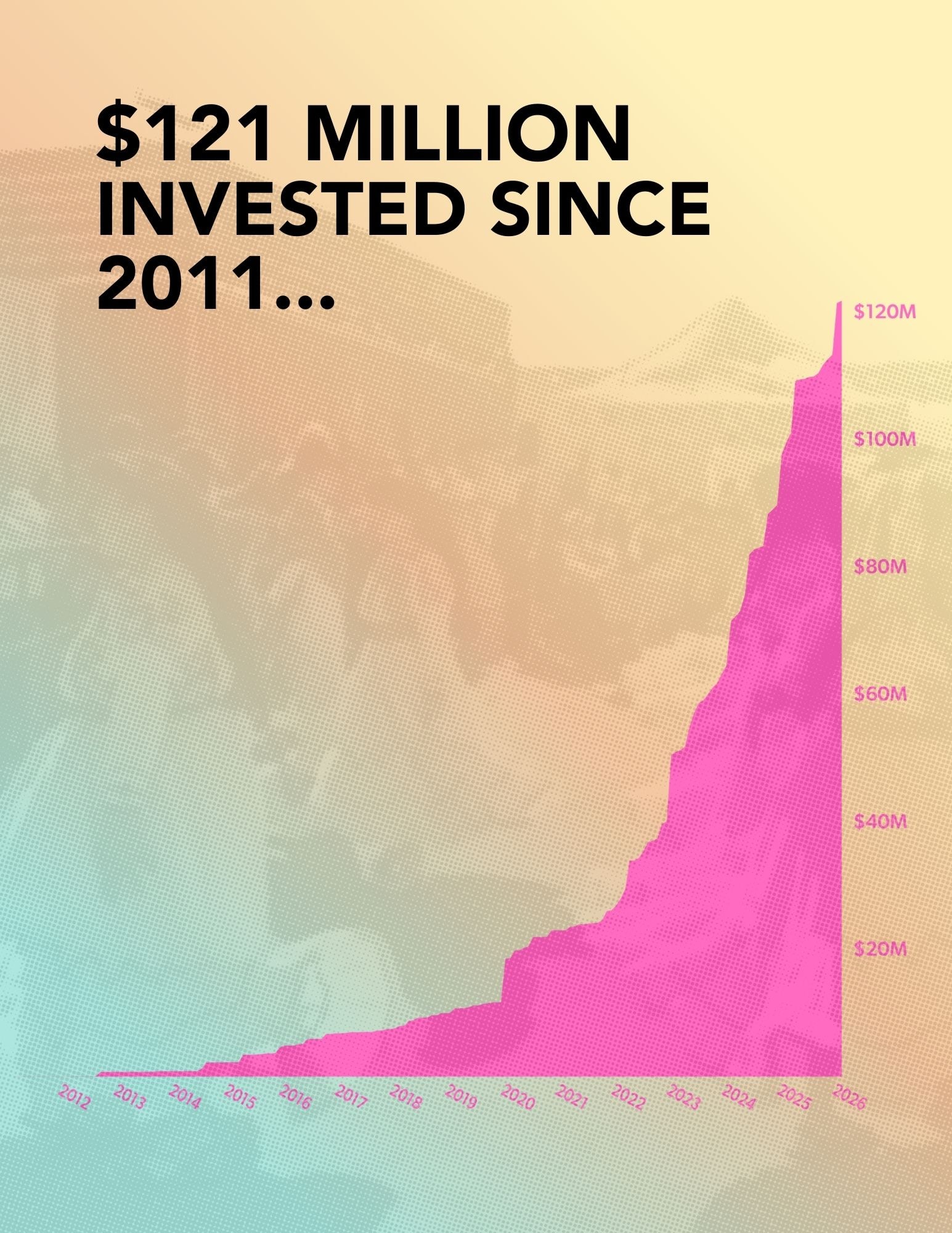
Going into 2020, we had deployed just over $16 million in non-extractive financing—at the time, an incredible amount, and an unprecedented national injection of capital into a worker cooperative sector that had long been under-resourced. But five years later, we saw something incredible happening.
The model we invented together as a cooperative, creating national financial infrastructure to resource the place-based work needed to build a cooperative economy, worked better than we dared imagine. By combining the aggregation of capital at scale with the power of community control, and investing in the local capacity of our member organizations, we were able to deploy more than $100 million in additional capital, just five years later.
For this year’s impact report, we’ve chosen to tell some of the stories of the member organizations whose local work made this possible, highlighting how, together, we have scaled our on the ground impact across the United States.
Between 2020 and 2025, our impact, measured in capital deployed and lives changed, grew by leaps and bound. Whatever crises the next five years may be bring, we believe that with your help and support, we have laid the foundations to continue rising to meet the scale of the challenges we face.
In solidarity,
Brendan Martin and Kate Khatib
Co-Executive Directors
Seed Commons
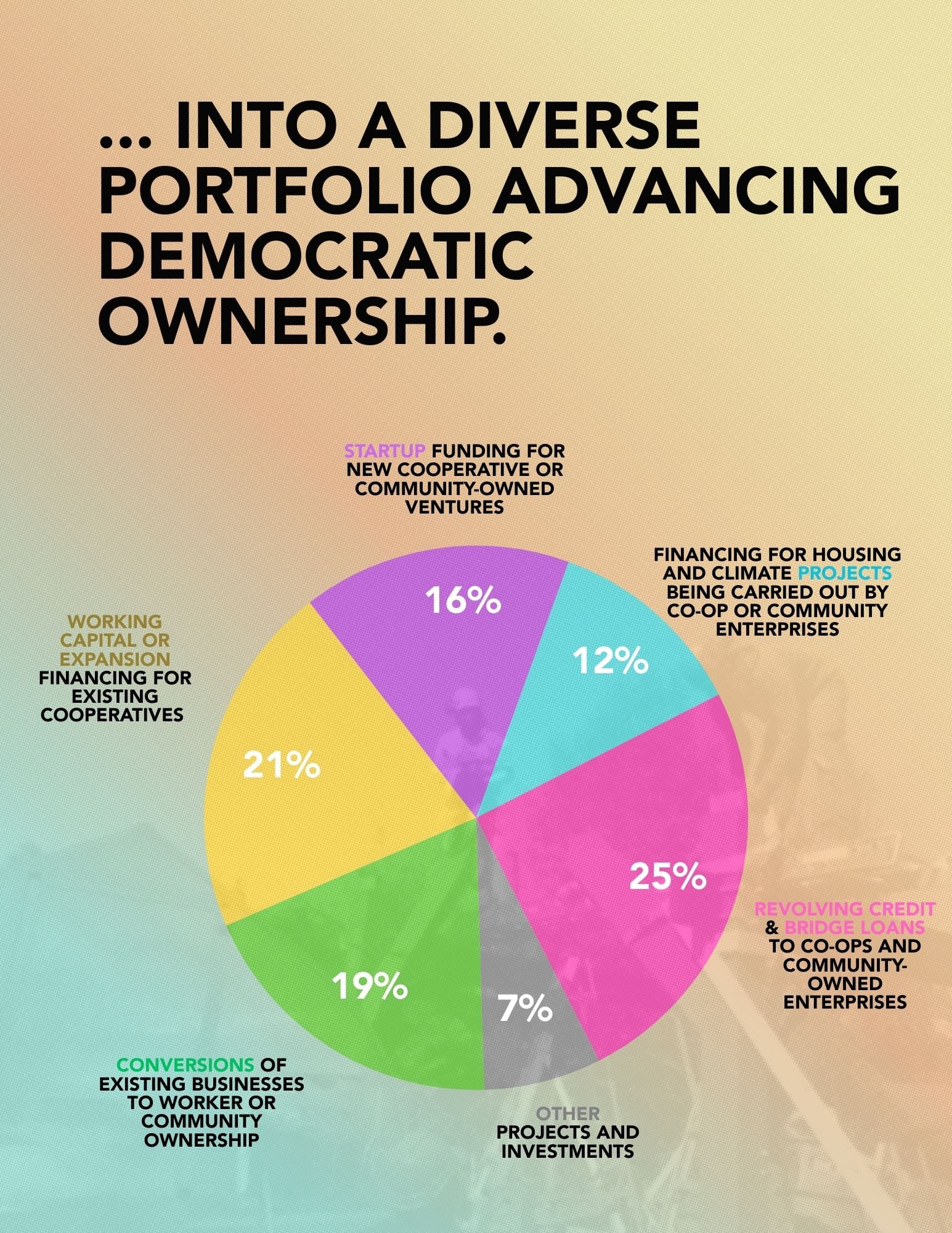
Seed Commons is a cooperatively-governed CDFI through which our local member organizations build shared economic power. Together, they can raise the non-extractive capital needed to advance deeply democratic ownership at scale, and then deploy that capital at the level of their communities.
But our story starts with a single fund, based in New York City...
Worker-owners of Donna
NEW YORK CITY
The working world
Seed Commons’ founding member
THE WORKING WORLD’S STORY:
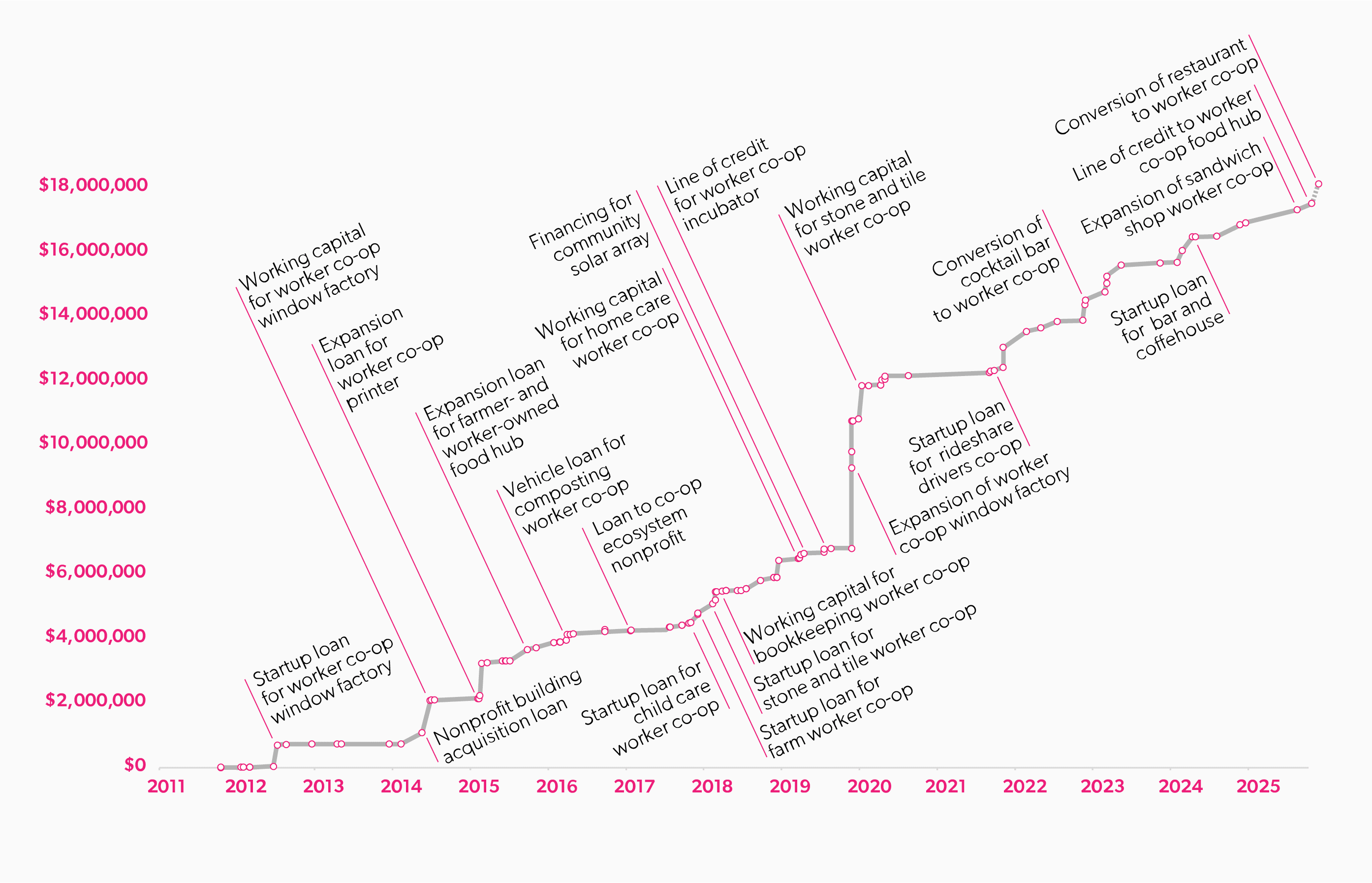
In the wake of the 2007-2008 financial crisis, interest in alternatives to an extractive, unaccountable economic system were soaring. Building on experience helping Argentina’s recovered factories finance production under worker-ownership, the Working World began providing non-extractive capital to a wave of new worker cooperatives, including an early $665K loan in 2012 to help the workers who occupied their Chicago factory in 2008 launch the New Era Windows Cooperative.
The Working World has today deployed nearly $18 million in non-extractive investment, increasingly focused on the New York City area, where it is a pillar of the largest ecosystem of worker cooperatives in the US, and where it has been recently building significant momentum around workplace democracy in the food and hospitality sector.
THE WORKING WORLD’S IMPACT:
The Working World could have simply continued to grow as a centralized CDFI, lending to worker co-ops nationwide.
But recognizing that non-extractive lending depends on place-based ecosystems of trust, it opted to innovate instead, joining with initial partners to create Seed Commons, our national-scale financial cooperative designed to foster local capacity for economic self-determination.
The earliest members of this cooperative had been busy developing their local capacity to advance worker and community ownership before the 2020 inflection point hit.
Now, building on these foundations, many of these members have seen remarkable growth in scale and impact over the past five years.
Here are some of their stories...
Worker-owners of Taharka Bros. Ice Cream
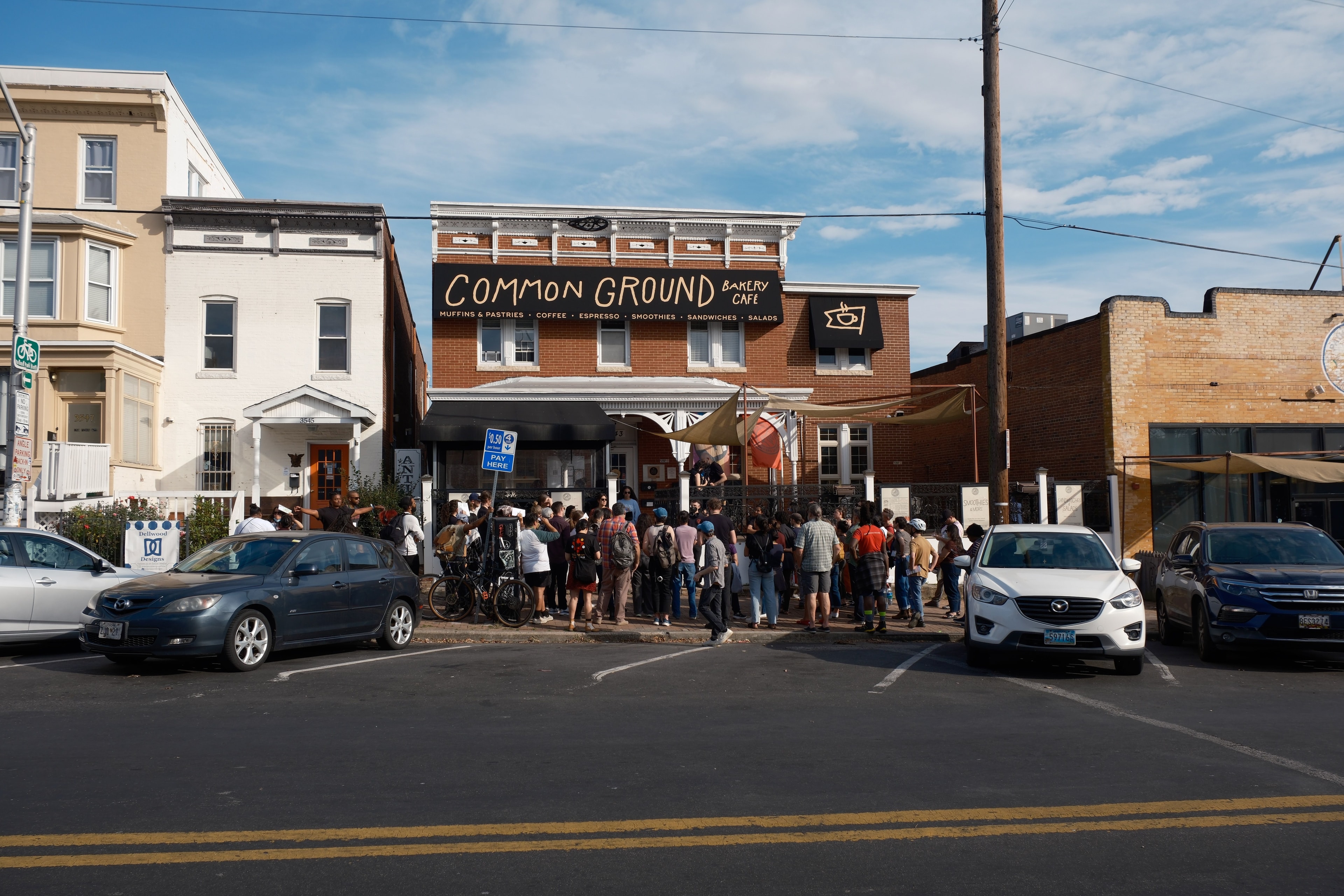
BALTIMORE
Baltimore Roundtable for Economic Democracy
Seed Commons member since 2015
BRED’S STORY:
BRED was formally convened by worker-owners from existing Baltimore co-ops in 2016, in recognition that growing and scaling the sector would only be possible with an organization dedicated to providing the necessary technical assistance, advocacy, and capital.
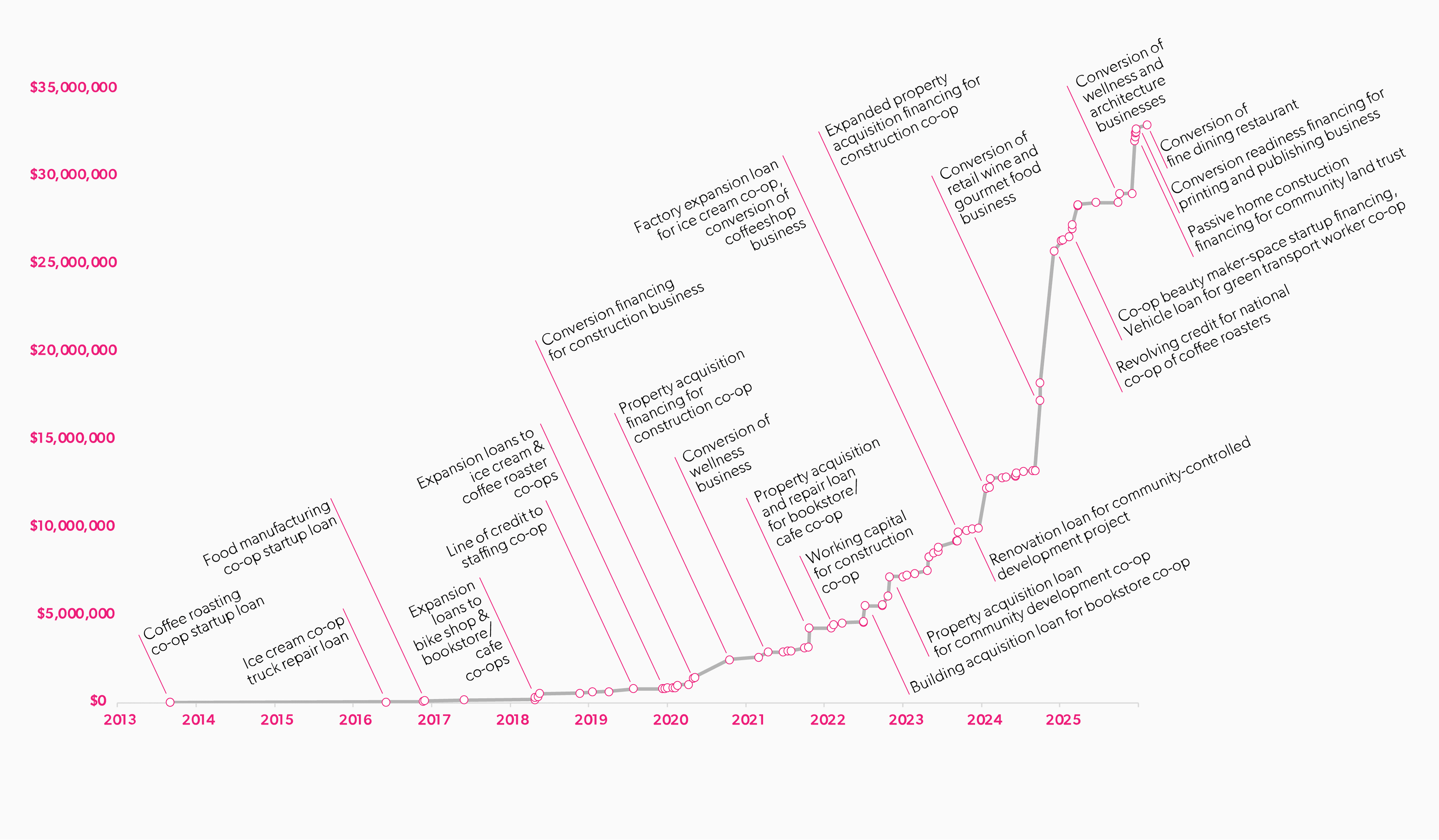
Serving as an initial prototype for what membership in the Seed Commons financial cooperative would look like, BRED deployed its first $800K in non-extractive investment between 2013 and 2020, building its skills and capacity.
Between 2020 and 2025, BRED scaled rapidly, deploying over $32 million. Their work has helped make workplace democracy a serious force in the city’s food service and production industries, has raised the profile of worker cooperative conversions through several high profile and successful transitions to worker ownership, and is increasingly working to advance community control of land and housing.
BRED’S IMPACT:
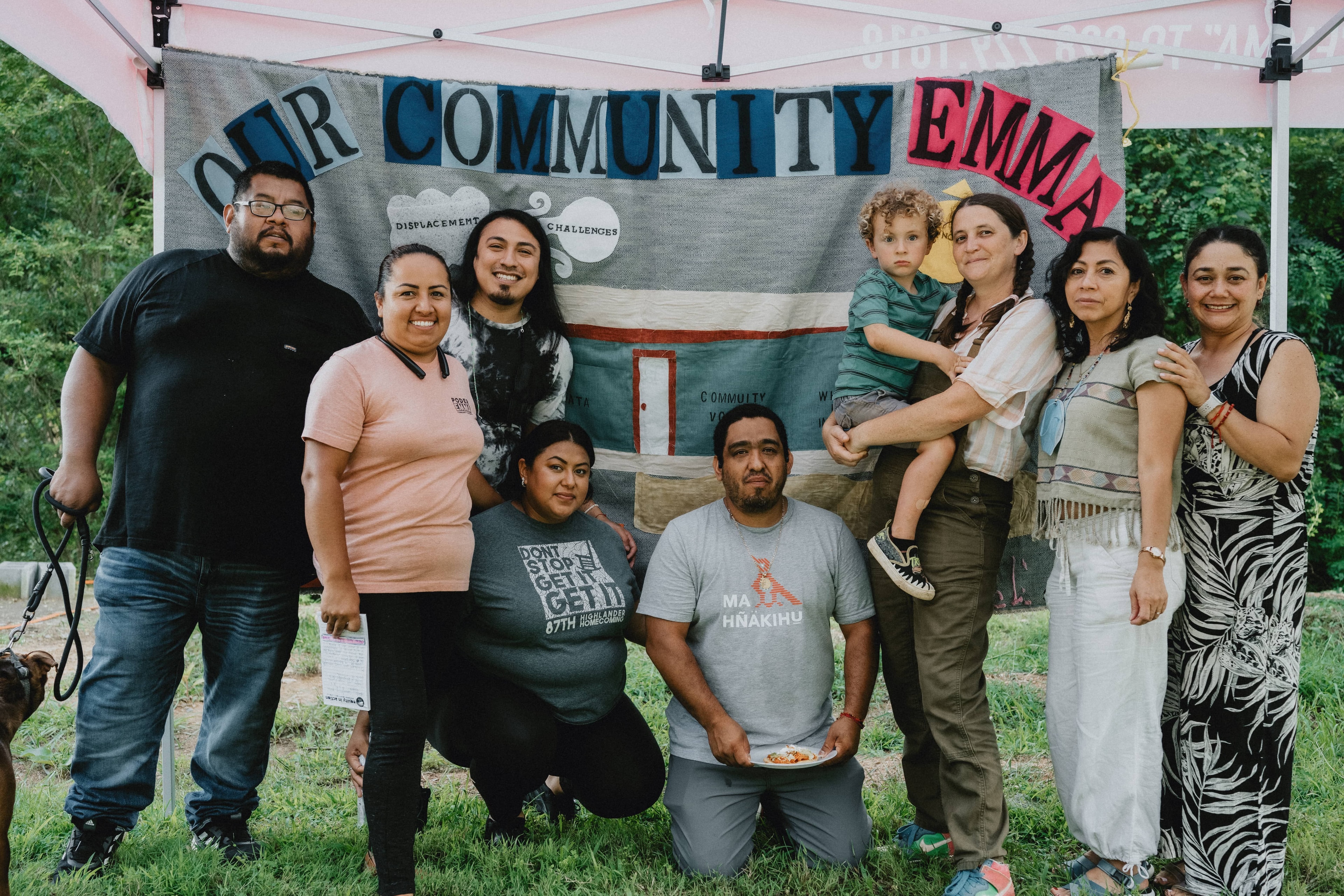
PODER Emma members
ASHEVILLE, NC
PODER EMMA
Seed Commons member since 2018
PODER EMMA’S STORY:
In the face of accelerating gentrification in Asheville, PODER Emma was founded to stop displacement and protect affordable housing, while building the infrastructure for a vibrant community, combining grassroots organizing with a vision of democratic ownership.
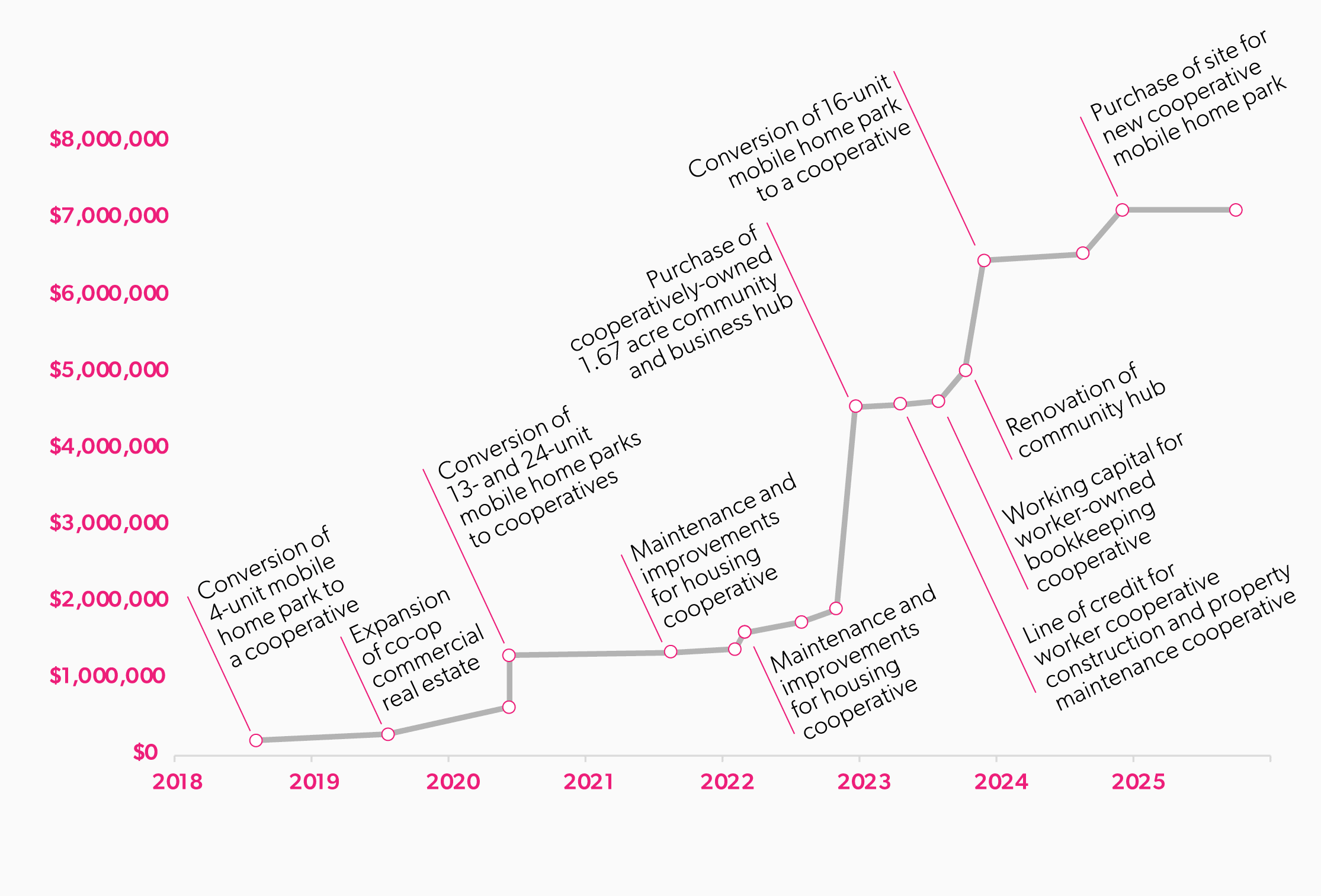
In 2018, PODER Emma made its first loan as a member of Seed Commons for $200K, purchasing and converting a mobile home park into a resident-owned cooperative. Since then, they’ve deployed nearly $7 million more, converting three additional parks to cooperative ownership, and securing the land for a fifth.
Alongside this critical work to stabilize and preserve affordable housing, they’ve launched multiple worker cooperatives within this ecosystem of shared ownership, kicked off an ongoing community-led R&D process for a green transition in manufactured housing, and financed the purchase and renovation of a large multi-purpose space to incubate and house community projects and businesses—infrastructure that served as a key hub for mutual aid recovery in the wake of Hurricane Helene.
PODER EMMA’S IMPACT:
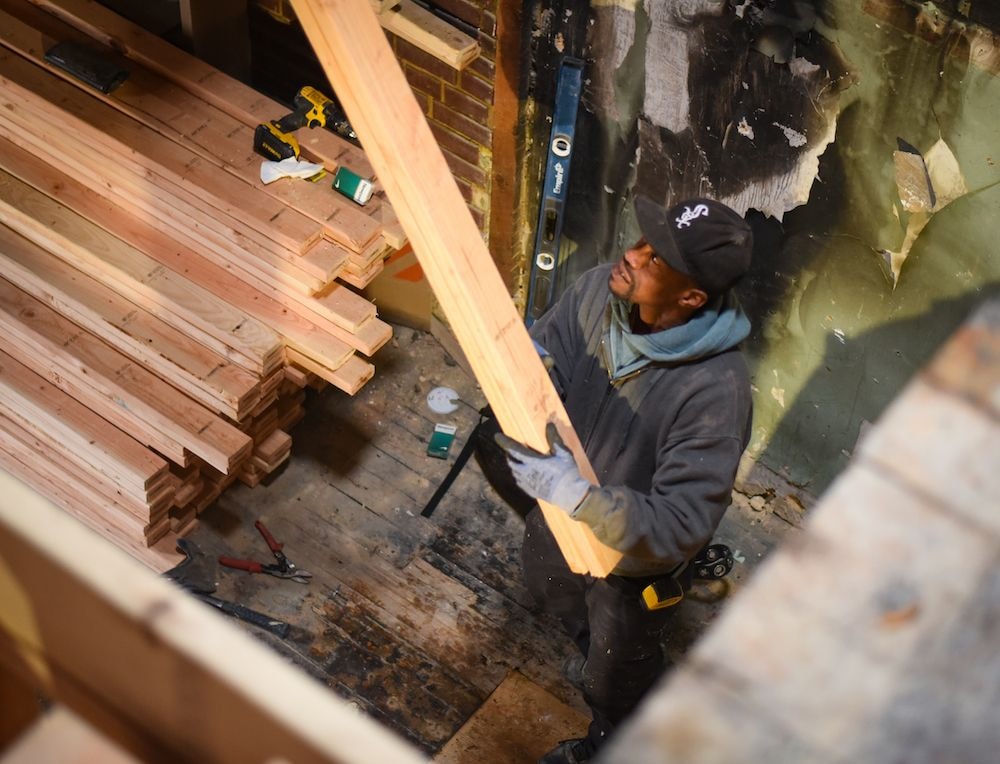
Workers from the Sustainergy worker cooperative in Cincinnati on the job
CINCINNATI, OH
CO-OP CINCY
Seed Commons member since 2018
CO-OP CINCY’S STORY:
In 2011, a group of union and faith organizers, inspired by the example of the Mondragon cooperatives, came together to create a grassroots organization dedicated to advancing worker ownership in Cincinnati.
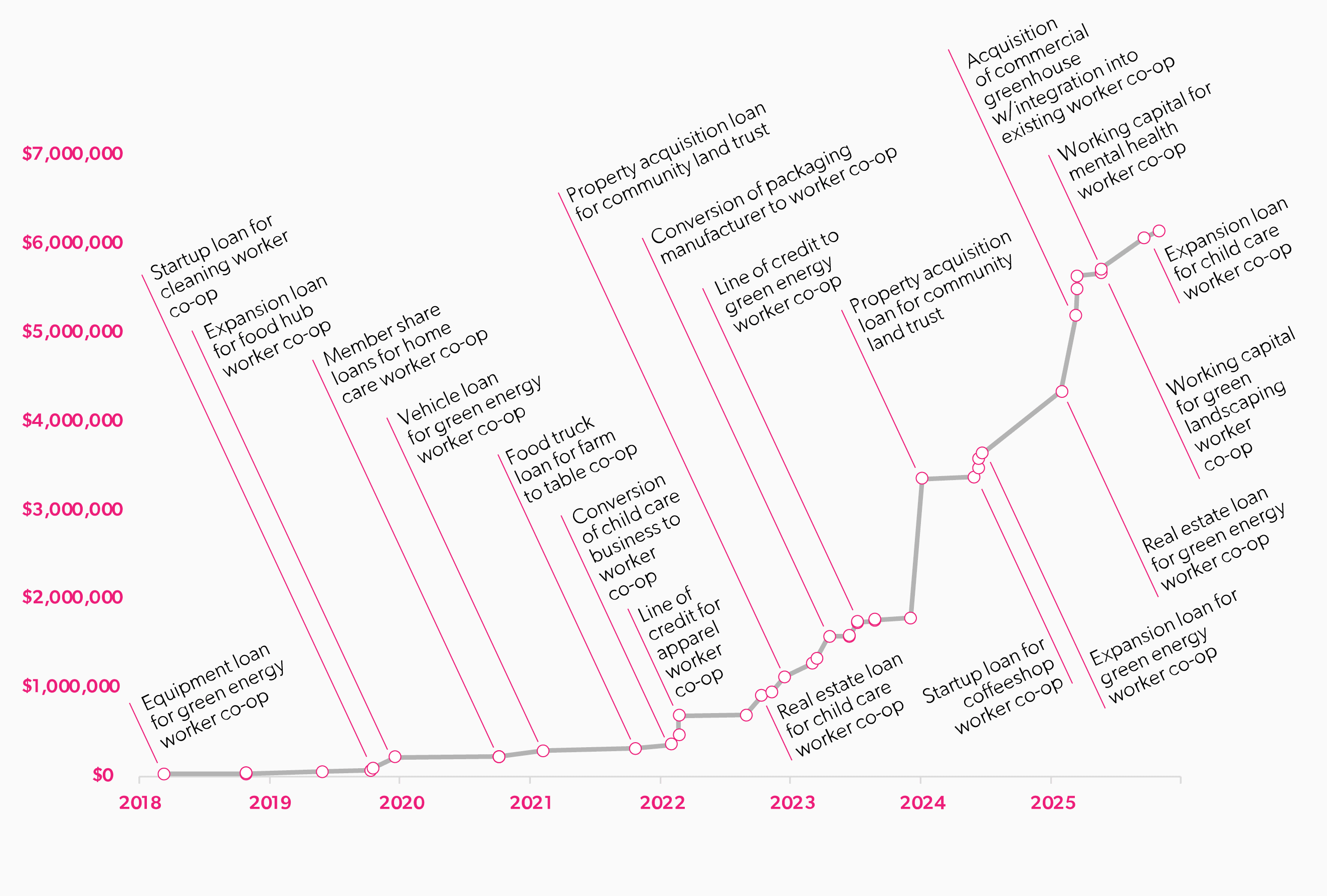
Without access to capital, their ecosystem of worker co-ops was not able to scale effectively. But in 2018, they were able to make their first loan as a member of Seed Commons, a $32.5K investment helping the green energy company they launched acquire the key equipment it needed to start scaling operations.
Today, Co-op Cincy has deployed over $6 million in non-extractive financing for local cooperatives. They’ve expanded across sectors to create good jobs with dignity and democracy in home and child care, green construction, and food & agriculture, have an active program focused around successful conversions of existing businesses to worker ownership, and have made investments in permanently affordable housing.
CO-OP CINCY’S IMPACT:
As the tremendous growth in our impact over the last five years has clearly shown, the model behind Seed Commons works.
By coupling cooperatively governed national financial infrastructure together with the place-based work of building a more democratic economy, we have created something bigger and more important than we originally dared to imagine.
Now, the newest members of our cooperative have launched themselves on similar trajectories to the ones traced in the pages above.
They are rapidly building the foundations needed for future impact, in community after community.
Here are just a few of their stories...
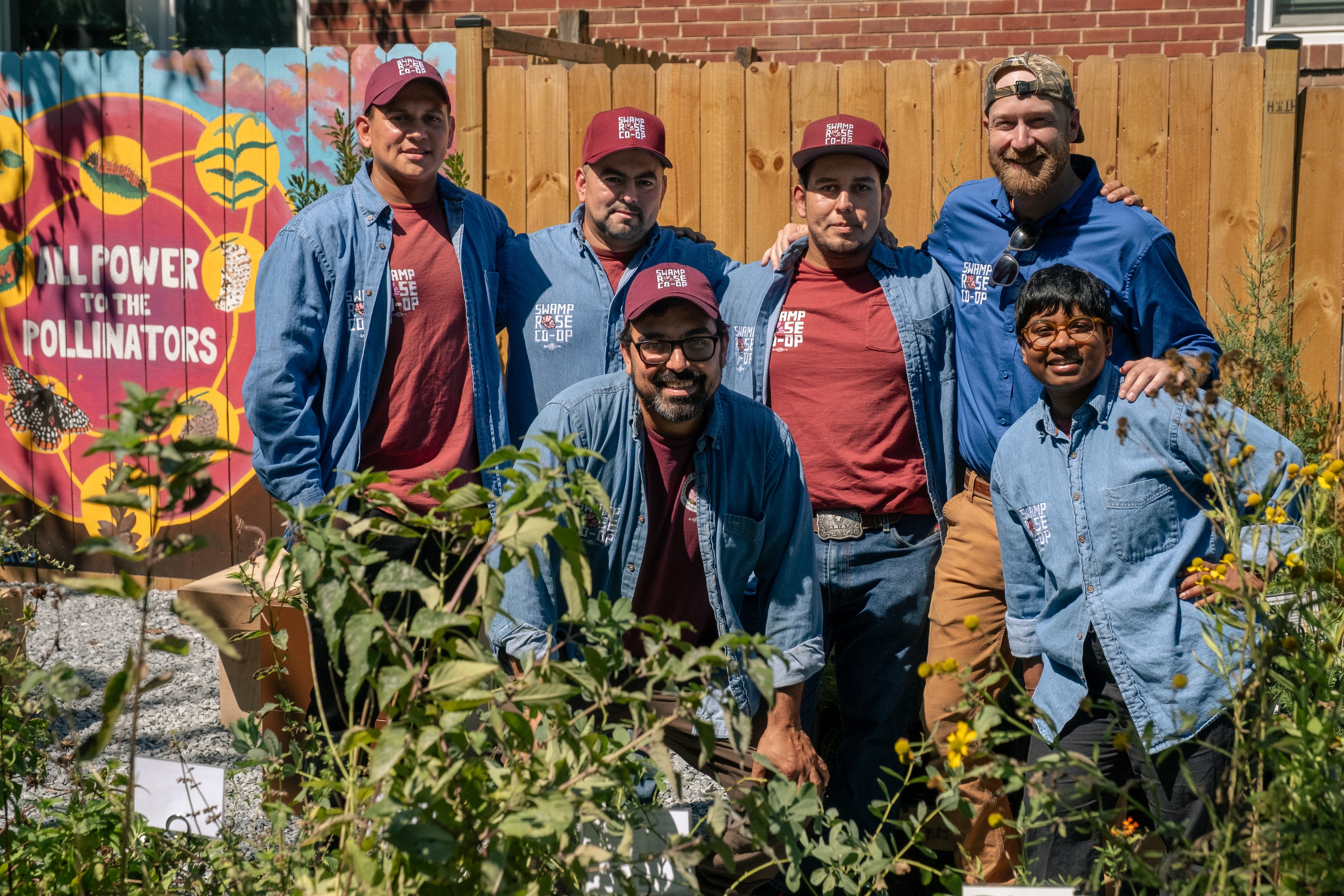
Worker-owners of Swamp Rose, and their new truck
WASHINGTON, DC
Beloved Community Incubator
Seed Commons member since 2021
BELOVED COMMUNITY INCUBATOR’S STORY:
In the wake of the 2016 election, community organizers in Washington, D.C. started Beloved Community Incubator to build the solutions—and power—that excluded workers needed.
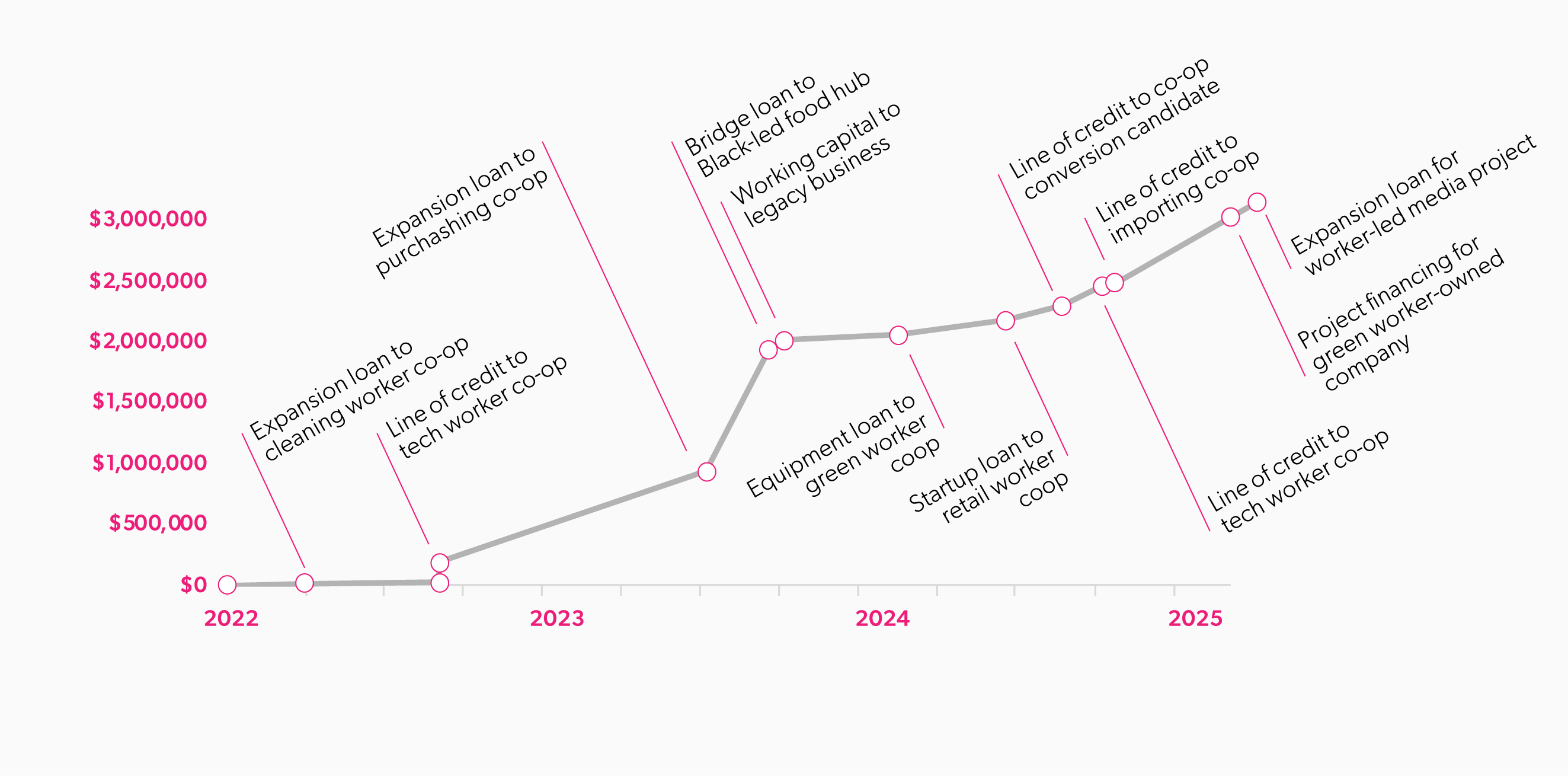
Joining Seed Commons, they created the DC Solidarity Loan Fund and made their first investment, a modest loan $10,000 to an immigrant-led cleaning cooperative to purchase new vacuums, in 2022.
Today, they have deployed over $3 million in non-extractive capital, supporting cooperatives that create green jobs, empower tech workers and journalists, localize purchasing for community-based institutions, and preserve legacy businesses at risk of displacement.
BELOVED COMMUNITY INCUBATOR’S IMPACT:
Worker-owners of Bonus Family
NASHVILLE, TN
New Economy of Tennessee Fund
Seed Commons member since 2020
NET FUND’S STORY:
In the spring of 2019, the Southeast Center for Cooperative Development and Free Hearts (an organization led by formerly incarcerated women that provides support, education, and advocacy to families impacted by incarceration, and helps connect reentering people with jobs, training and financial support) formed an alliance to create a local non-extractive loan fund to support worker cooperatives start-ups and conversions.
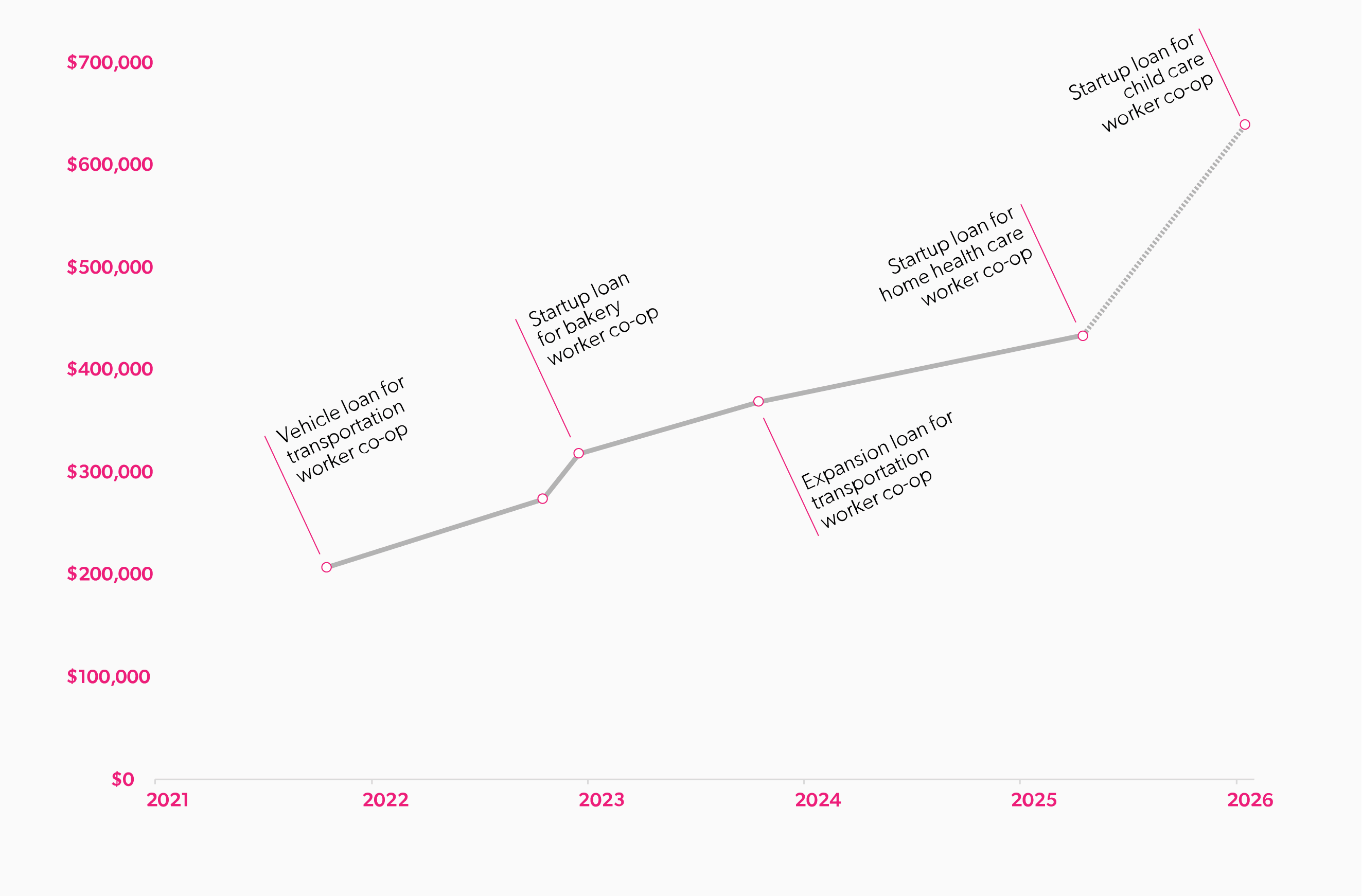
NET Fund made its first loan in 2021, and today has approved over $600K in non-extractive investments. Increasingly, it is supporting the creation of worker-owned care cooperatives, building opportunities for ownership in the fast-growing sector.
NET FUND’S IMPACT:
NEW YORK STATE
CO-OP HUDSON VALLEY
Seed Commons member since 2019
CO-OP HUDSON VALLEY’S STORY:
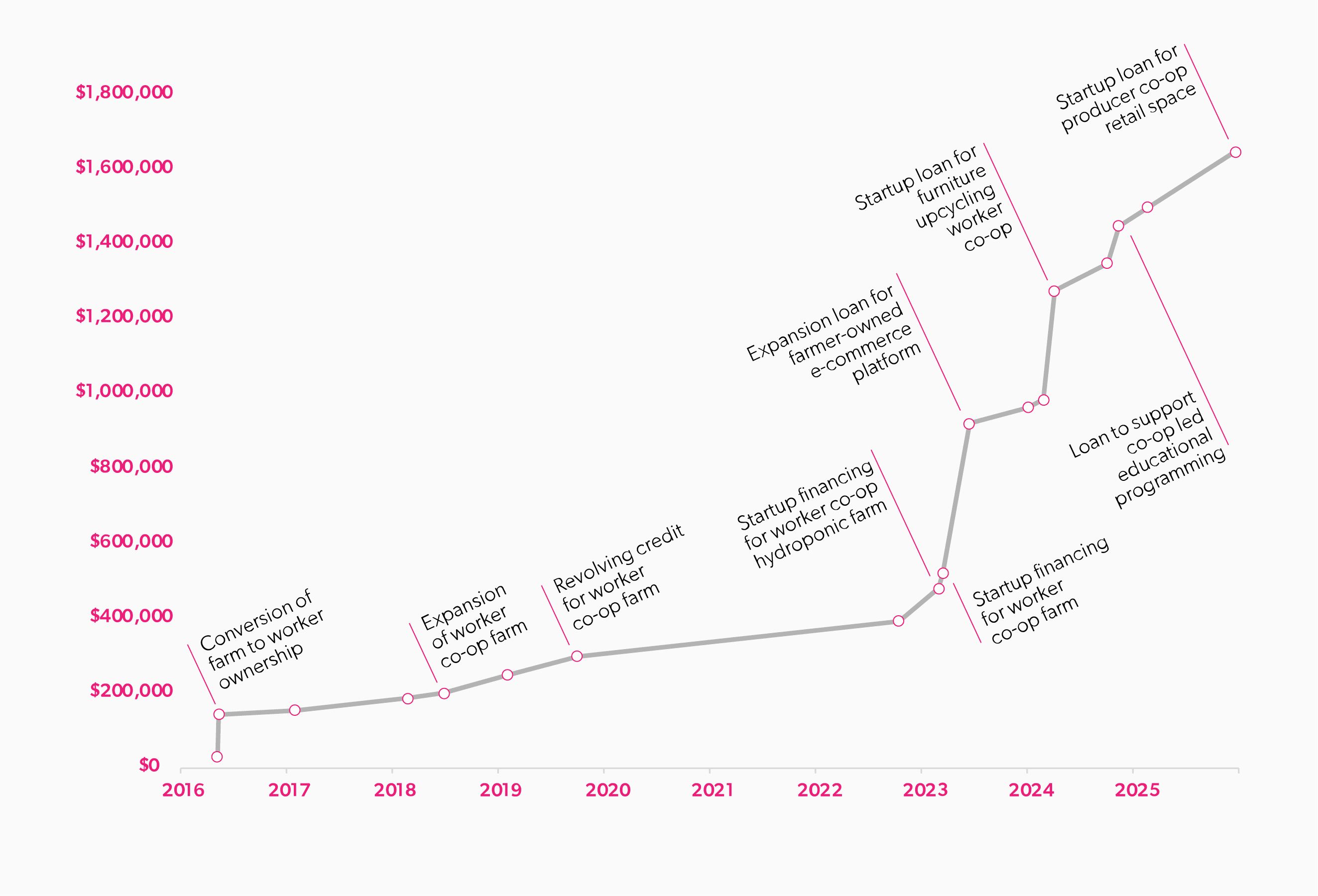
The initial gatherings creating Seed Commons took place at a retreat center across the road from Rock Steady Farm—leading to an early $143K loan to convert that business to democratic worker ownership.
Co-op Hudson Valley, founded in 2019 to advance the local co-operative ecosystem, built on this foundation as a member of Seed Commons, with a major acceleration of their investment activity starting in 2023.
Today, they’ve deployed over $1.6 million in non-extractive financing, with a particular concentration in agricultural worker co-ops, including both farms and distribution platforms, and a focus on bringing traditionally marginalized workers in that sector into ownership.
CO-OP HUDSON VALLEY’S IMPACT:
Resident-owners of Montevista Cooperative
NATIONWIDE
RIGHT TO THE CITY ALLIANCE
Seed Commons member since 2021
RIGHT TO THE CITY’S STORY:
Most of our member organizations are based in a geographic community. But we have a few members that don’t fit that mold—these are national organizations that create the bonds of community and trust needed for non-extractive lending by being involved as deep partners in support of social movement organizing.
One of these members is the Right to the City Alliance, which works with communities across the US to demand and win housing justice. By joining Seed Commons, they are able to help the residents they fight alongside protect the their victories against displacement over the long haul through investments in democratic ownership of land and permanently affordable housing.
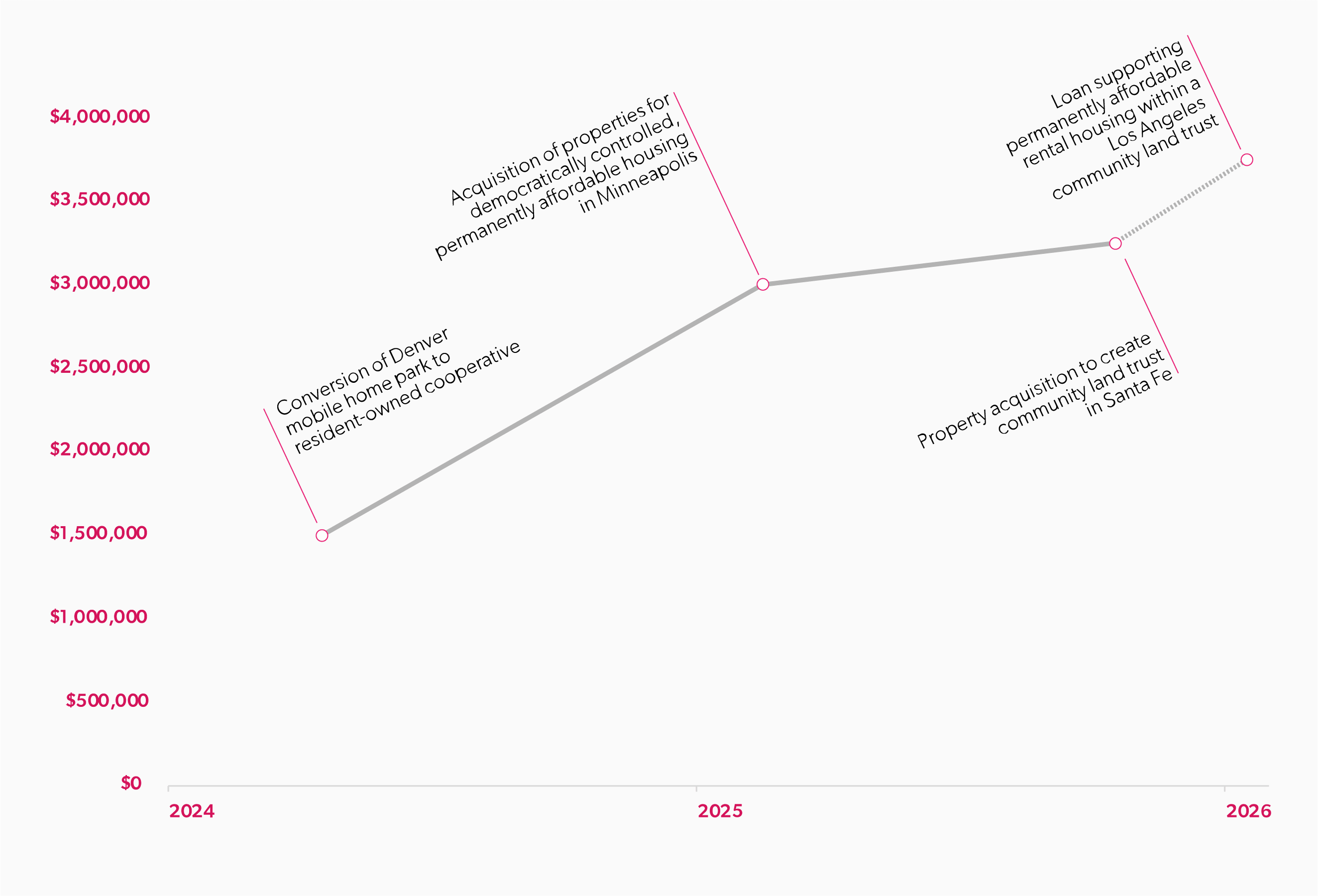
Making their first loan in 2024 to help create Denver’s first cooperatively owned mobile home park, Right to the City Alliance has already approved over $3.7 million in non-extractive investment in community-controlled land and housing as a member of Seed Commons.
RIGHT TO THE CITY’S IMPACT:
Our members’ ability to continue scaling the impact they have in their communities comes from the collective capacity we have built together, as Seed Commons, to aggregate non-extractive capital for the cooperative economy.
That capacity, in turn, depends on the many, many investors and funders who have aligned their portfolios with this transformative vision for democratic ownership and community control.
We are particularly excited to highlight two watershed $5 million investments made into our fund in 2025, one from The Kataly Foundation and one from The California Endowment.
“Investing in Seed Commons was exciting because it puts capital and decision-making power directly into the hands of communities historically excluded from economic opportunity. Through non-extractive financing and cooperative governance, Seed Commons empowers communities of color to build self-determination, shared prosperity, and collective economic power, which aligns with the mission of the Restorative Economies Fund, and the Kataly Foundation at large.”
—Hans How
Integrated Capital Officer
The Kataly Foundation
“At The California Endowment, we seek to use all of our resources in the most effective manner to strengthen communities and advance health equity and our recent program related investment in Seed Commons reflects those goals. Through this partnership, we are excited to support the growth of the cooperative ecosystem in California and nationally.”
—Aifuwa Ehigiator
Investment Officer
Program Related Investments
The California Endowment